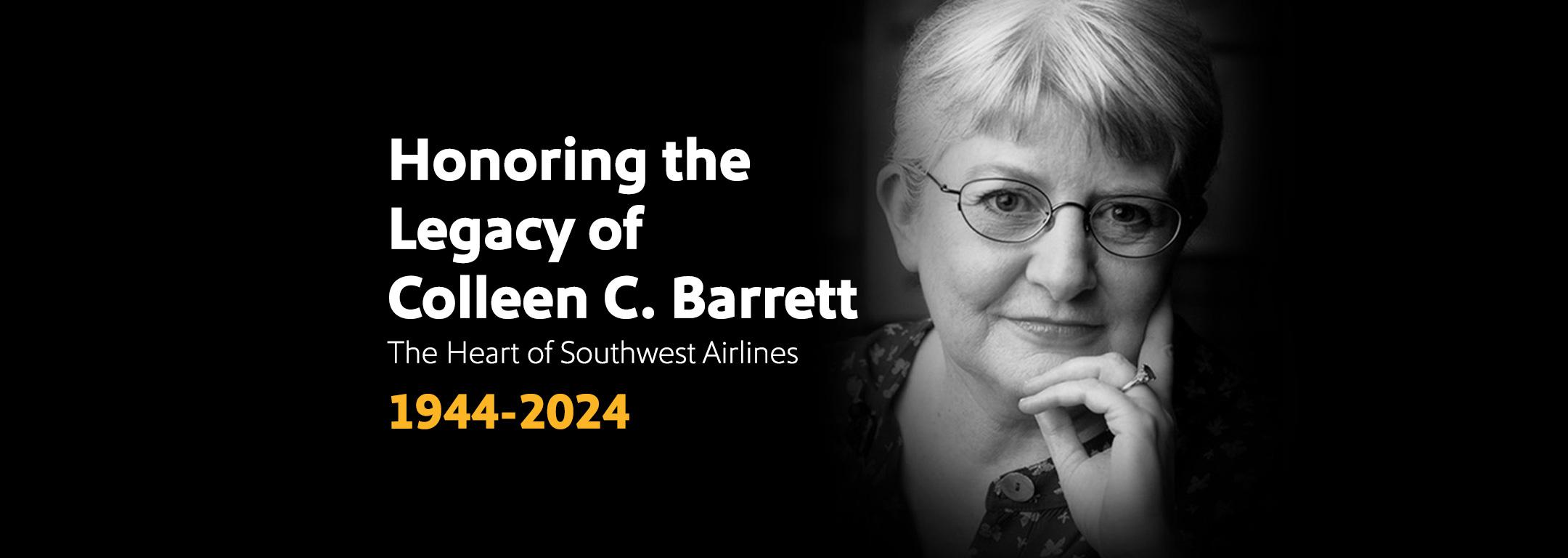


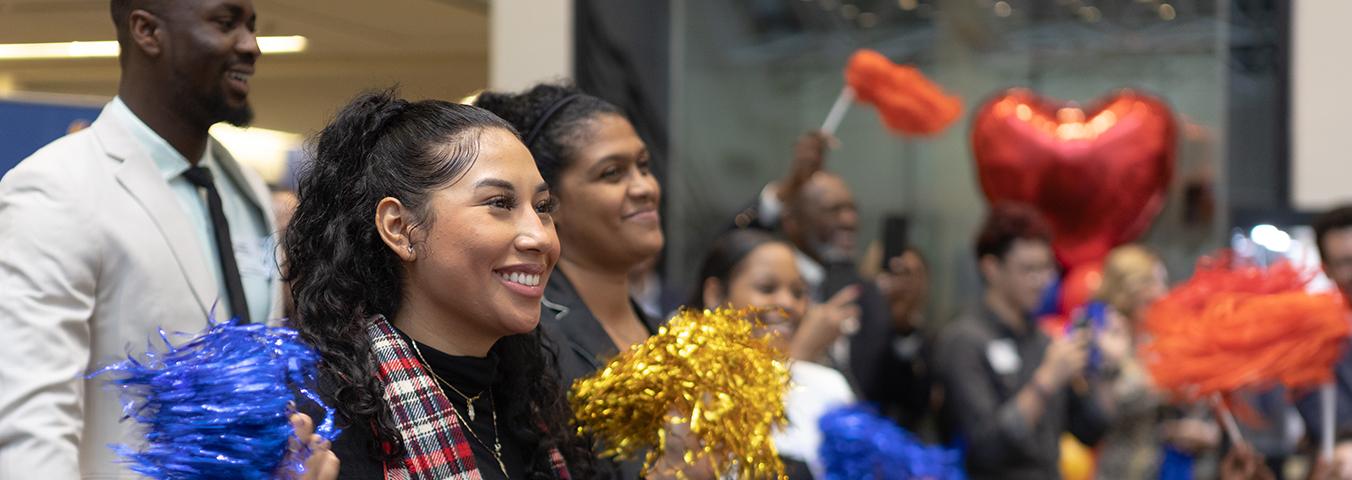

Happy Birthday to Colleen C. Barrett, founder of the Institute for Cultural Excellence & Customer Service

balloons
Southwest online rgb rev

Happy Birthday to Colleen C. Barrett, founder of the Institute for Cultural Excellence & Customer Service

Southwest online rgb rev

The Colleen C. Barrett Institute for Cultural Excellence & Customer Service

Southwest online rgb rev
8 10 TL

Nurturing Culture: As An Employee

As a People-first Company, Southwest has always believed that nurturing a strong Culture is about nurturing our People. Before I started in Las Vegas in 1996 as a Customer Service Agent, I worked at a lot of companies that didn’t share that philosophy. It was almost like wearing a mask at work—you had to hold back a part of yourself to satisfy expectations and succeed at the job. From the jump, though, I could tell Southwest was different.

Throughout my career, especially in the beginning, I had Leaders and Cohearts who always checked on me, making sure I felt empowered to do my job the right way. Even more impactful, they made sure I knew that my individuality was what made me a great fit at Southwest. Like Tennina mentioned last month, a cookie-cutter approach to managing won’t motivate our People. Motivation comes when Hospitality—the drive to make our Cohearts and Customers feel welcomed, cared for, and appreciated—is kept top of mind.

How can we nurture this type of environment? I try to do three things daily:

  • Ask my Cohearts how they are outside of work—Recognize who they are as a person, not just what they bring to their position.
  • Be present and intentional in conversations—Whether you’re helping a Customer or welcoming a new Coheart, people can tell when you’re really listening.
  • Stay humble and learn from peers and Leaders—Chances are, they might know a lot more than you.

Being intentional matters. When I have a bad day, the first person I want to turn to, besides my wife, is a fellow Employee. After 28 years of building relationships at Southwest, I’ve realized that these connections, my Cohearts, are the ones who know how to encourage me best—to stay positive, remind me of the bigger picture, and maybe even crack a joke at my expense (because you’ve gotta learn to laugh at yourself sometimes, right?). When we advocate for one another, we can then depend on one another to help reframe a bad attitude and take us back to the importance of Hospitality in the workplace. Again, it goes back to intentionality. A genuine, caring conversation and a warm smile can turn anyone’s day around, just as it has mine, many times.

I’ll always be proud to work for a Company that fosters a Culture of authenticity and concern for its People. Because when we feel like we can be our true selves at work, it becomes easy to remember that our Customers are just like us—they need an advocate, too.

Picture of Steve Goldberg

Steve Goldberg

Senior Vice President – Operations and Hospitality

View Thought Leaders Recommended Resources

Have a question? We'd love to hear from you!

Submit your questions below and our Thought Leaders might address them in future articles and newsletters!

newsletter hero sept 24
Carrie Mills

Healthy Teams: Leading High-Trust High-Performing Teams

In my nine-year career at Southwest, I have been fortunate to be supported and led by individuals who modeled integrity and did so with resolute consistency. That kind of leadership not only instills trust but teaches you how to lead others with that same commitment, which is crucial for navigating work that presents challenges that may not always have a clear or obvious solution.

Healthy teams are built through leadership behaviors that create both trust and healthy conflict. These elements may seem to work against each other; however, they must coexist. The strongest teams are those where individuals feel safe to speak up, challenge ideas, and admit mistakes. They also hold themselves and one another to a high standard of performance and ownership.

Read More
oct22 newsletter
Patrick Lencioni

Healthy Teams: From Dysfunction to Cohesion to Strength

Like it or not, all teams are potentially dysfunctional. From the basketball court to the executive suite, politics and confusion are more the rule than the exception. Why? Because teams are made of imperfect, fallible human beings. At the same time, and in beautiful irony, being exceedingly human is also why teams succeed.

A former and quite successful client best expressed the power of teamwork when he once told me, “If you could get all the people in the organization rowing in the same direction, you could dominate any industry, in any market, against any competition, at any time.” When I repeat this to leaders, they immediately nod their heads but in a desperate sort of way. They grasp the truth while simultaneously surrendering to the perceived impossibility of it. Fortunately, there is hope!

Read More
dec22 newsletter
Bobby Loeb

Healthy Leaders Embrace Humility

As we focus this first quarter on Healthy Leaders, I’m reminded that one of the most important—and often overlooked—indicators of a Healthy Leader is humility. Not the kind that downplays confidence or conviction but one that keeps a Leader grounded, open and genuinely connected to the People they serve. Healthy Leaders understand that Leadership isn’t about position or recognition. It’s about service, trust and putting others first.

Which turns my thoughts immediately to Colleen Barrett. Colleen led with a quiet strength rooted in humility. She never needed the spotlight, yet her influence was undeniable. She showed us what it looked like to lead with heart—listening first, serving Employees and staying true to the values that make Southwest special. Her example continues to shape how many of us think about Leadership today.

Read More
Scroll to Top