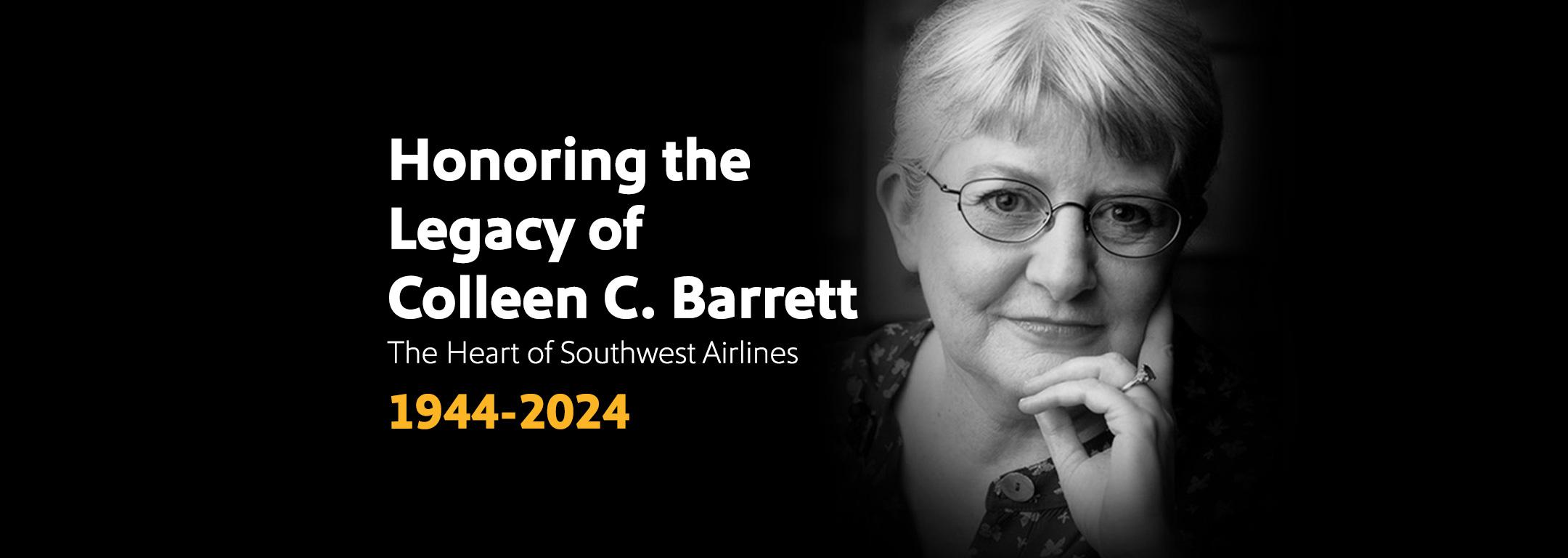


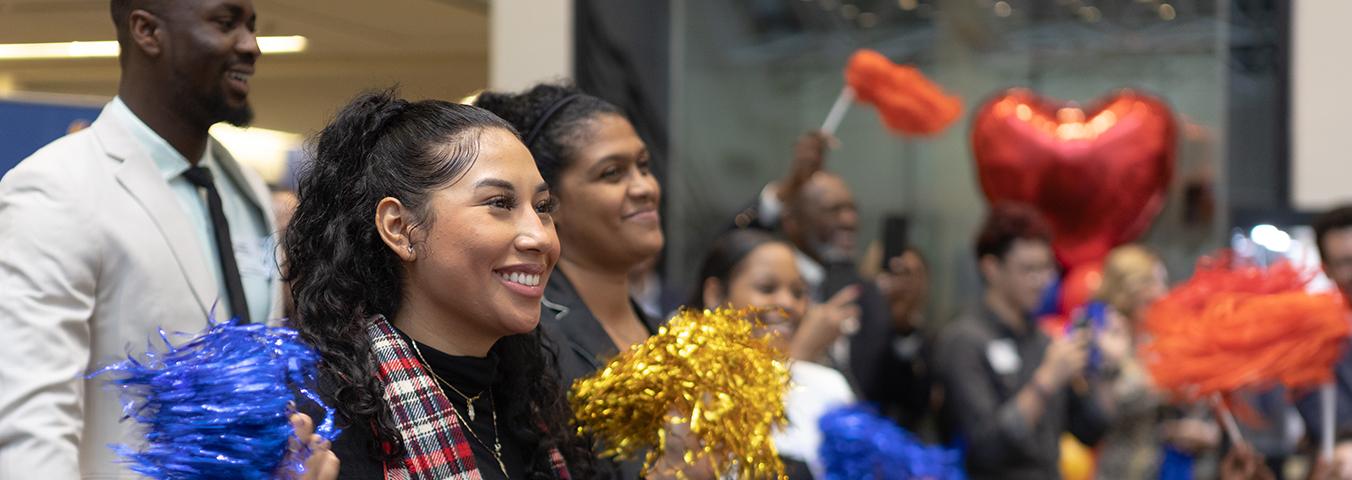

Happy Birthday to Colleen C. Barrett, founder of the Institute for Cultural Excellence & Customer Service

balloons
Southwest online rgb rev

Happy Birthday to Colleen C. Barrett, founder of the Institute for Cultural Excellence & Customer Service

Southwest online rgb rev

The Colleen C. Barrett Institute for Cultural Excellence & Customer Service

Southwest online rgb rev
TL op 4

DE&I: Equity

Last month, we highlighted how important diversity is at Southwest Airlines. We continue to focus on increasing our diverse talent pipelines so we better represent the communities that we serve.

Additionally, we want our Employees to feel included as part of the Southwest Family. Inclusion is about each of us feeling valued and appreciated for the unique talents and perspectives we offer. Every Southwest Employee should feel that their Leaders and their Cohearts embrace and support them for the authentic views and experiences they bring each and every day. 

In 2021, over 24 million American employees left their jobs. In a recent study analyzing why these employees departed, researchers determined that disrespect and lack of inclusivity were the top two reasons these individuals resigned¹. Make no mistake about it, at Southwest, we work every day to create an environment that is both respectful and inclusive. We are committed to building a Culture of belonging by inviting and welcoming the contributions of others. We know that every voice adds value and when we recognize that value among our Cohearts, this is demonstrated in how we value and interact with our Customers.

Inclusivity takes intention. At times, this might mean reflecting on what we don’t know so that we better value others’ perspectives. It might mean inviting feedback so that we know how we can better include others in the conversation and dialog. It might also mean recognizing our mistakes and growing from them. In August, Southwest’s Diversity, Equity, & Inclusion Team hosted our 2022 Inclusion Summit. This year’s focus was Allyship into Action. We are allies when we show empathy to others and when we can imagine what someone might be thinking or feeling. We are allies when we exhibit compassion and concern about how someone else is feeling. Being an ally is one way to foster an inclusive environment, but ally isn’t a noun – it’s a verb. We are allies we when we put our empathy and compassion into action.

We won’t always agree, but that is not the objective of an inclusive environment. We achieve inclusivity when we remain respectful, when we continue collaborating, and when we learn from one another. 

XOXO,

Picture of Juan Suarez

Juan Suarez

Vice President Culture & Chief Inclusion Officer

View Thought Leaders Recommended Resources

Have a question? We'd love to hear from you!

Submit your questions below and our Thought Leaders might address them in future articles and newsletters!

9 8 22 TL
Patrick Lencioni

Healthy Cultures: The Crucial Caretaking of Talent

The “war” for talent is real. Across all industries, companies must compete for people with the right skills and attitude that all great organizations need to grow and sustain success. Without the right “weapons,” it’s a hard battle to win.

Conventional wisdom says the key to winning talent is to be aggressive about salaries, bonuses, stock options, and perks. No reasonable person would disagree that financial reward plays a tremendous role in an employee’s decision to stay in a job. But it’s not the most important variable—not even close.

Engaged, loyal employees are cultivated by a healthy organizational culture—one that invites participation, is free from needless politics, and offers pathways to grow both professionally and personally. For organizations that don’t prioritize their foundational culture or address cultural dysfunction, any other attempt to retain and attract people will effectively be the equivalent of reshuffling deck chairs on the Titanic.

Read More
12 8 22 TL
Eric Campbell

Healthy Teams: Leading Teams That Are Both Driven and Kind

In the airline industry, Customers travel for a broad spectrum of reasons, and when experiences do not go as planned, emotions can run high. In those moments, frontline Employees represent both the first and last opportunity to ensure Customers feel welcomed, cared for, and appreciated. As Leaders, our responsibility is to support Teams in navigating these interactions with clarity, consistency, and the right mindset.

Over time, I’ve come back to two guiding principles that help anchor that mindset, both of which align closely with how we lead at Southwest.

First, don’t take things personally. When Customer emotions are elevated, a natural reaction is to put up a defense—deflecting blame, trying to find a silver lining, or in a worst-case scenario, matching the negative energy with a poor attitude. While we can’t always control what happened, we can control how we respond.

Read More
newsletter hero sept 24
Carrie Mills

Healthy Teams: Leading High-Trust High-Performing Teams

In my nine-year career at Southwest, I have been fortunate to be supported and led by individuals who modeled integrity and did so with resolute consistency. That kind of leadership not only instills trust but teaches you how to lead others with that same commitment, which is crucial for navigating work that presents challenges that may not always have a clear or obvious solution.

Healthy teams are built through leadership behaviors that create both trust and healthy conflict. These elements may seem to work against each other; however, they must coexist. The strongest teams are those where individuals feel safe to speak up, challenge ideas, and admit mistakes. They also hold themselves and one another to a high standard of performance and ownership.

Read More
Scroll to Top