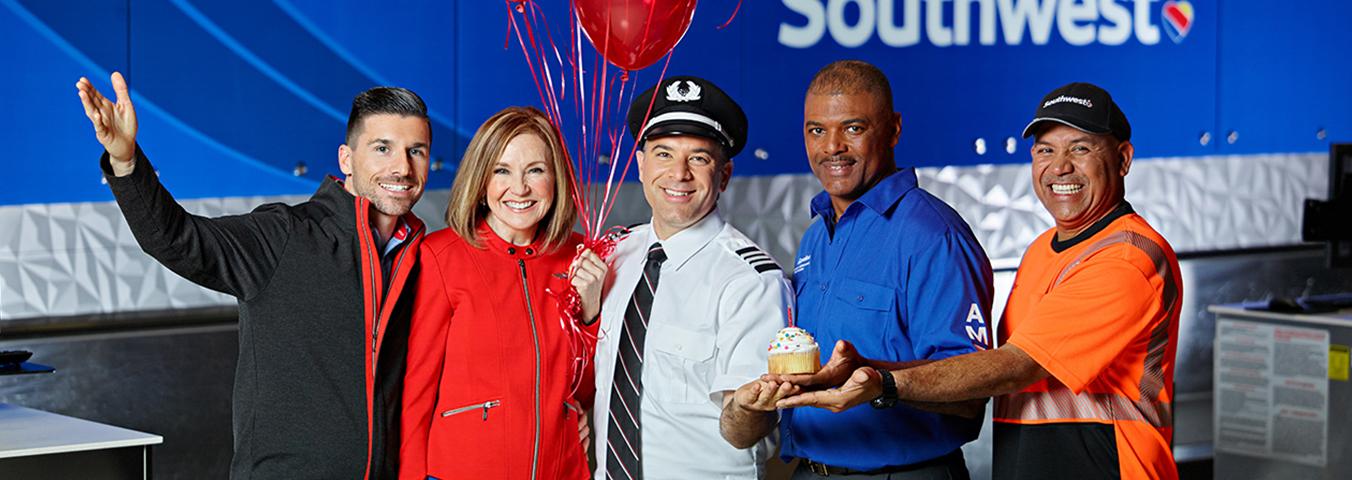





Happy Birthday to Colleen C. Barrett, founder of the Institute for Cultural Excellence & Customer Service

balloons
Southwest online rgb rev

Happy Birthday to Colleen C. Barrett, founder of the Institute for Cultural Excellence & Customer Service

Southwest online rgb rev

The Colleen C. Barrett Institute for Cultural Excellence & Customer Service

Southwest online rgb rev
6 8 TL

Humankind: Cultivating Kindness in the Workplace

When hosting visitors at Southwest, they often remark that People smile at them in the halls. I’m always surprised that it’s something that stands out. After 22 years at Southwest, it isn’t something I think twice about. The Golden Rule is the standard for how Southwest Airlines Employees treat one another, and it’s been that way since day one. And as a Company, we’ve always endeavored to put People first.

When asked to write about cultivating kindness in the workplace, it seemed like an easy assignment. Be considerate. Be a good listener. Be helpful. Lean into the attributes that contribute to being a kind person. Right? The short answer is yes, of course. We must bring our “best selves” into the workplace. 

Did you know? Some 33 years ago, we changed one of our department names to align with our Values. We announced it in this excerpt from a 1990 edition of “LUVLines” (an internal Employee news publication we still produce!). “In keeping with the People-oriented Culture that we, at Southwest, are famous for (or in some cases infamous for), our Personnel Department shall from now this day forward be known as the ‘People Department.’”

Small steps like this are woven into Southwest’s history and are part of the framework for continually nurturing a kind and caring Culture. However—and this is a big however—behind those efforts is a lot of hard work. As I began thinking about my journey as a Southwest Employee and Leader, I realized much of what I’ve learned about creating an environment where kindness can flourish has come from navigating diverse experiences and challenges. Recognizing and appreciating differences among peers; demonstrating consistent, trustworthy Leadership; thoughtfully giving and receiving constructive critique; embracing humility; meaningfully addressing conflict—these are just a few of the stepping stones on the path to genuinely cultivating a kind place to work.

To cultivate kindness, you must plant it first. That begins with the hiring process. Select candidates with the skills and experience for a position but also demonstrate the intangible characteristics that align with an organization’s values. Members of our Talent Acquisition Team are involved in at least one part of the interview process to ensure we’re selecting those to carry on the Values we’ve worked so hard to build. In that same way, kindness only grows under the intentional care of engaged, People-centric Leaders. How you promote and develop those who lead your organization is vitally important. 

Finally, you must choose how and who you want to be. I encourage you to find joy in what you do and seek goodness in others daily. Pursue the positive. Laugh. As a Leader, temper heavy moments with light. Kindness rarely works as a mandate. Whether in easy or hard times, how we treat others is ultimately an individual decision. I find a funny meme at just the right time or a handwritten note to make sure someone knows I’m thinking of them can be simple acts of kindness that make a big impact. Be the difference you wish to see.

XOXO,

Picture of Lindsey Lang

Lindsey Lang

Vice President People

View Thought Leaders Recommended Resources

Have a question? We'd love to hear from you!

Submit your questions below and our Thought Leaders might address them in future articles and newsletters!

9 8 22 TL
Patrick Lencioni

Healthy Cultures: The Crucial Caretaking of Talent

The “war” for talent is real. Across all industries, companies must compete for people with the right skills and attitude that all great organizations need to grow and sustain success. Without the right “weapons,” it’s a hard battle to win.

Conventional wisdom says the key to winning talent is to be aggressive about salaries, bonuses, stock options, and perks. No reasonable person would disagree that financial reward plays a tremendous role in an employee’s decision to stay in a job. But it’s not the most important variable—not even close.

Engaged, loyal employees are cultivated by a healthy organizational culture—one that invites participation, is free from needless politics, and offers pathways to grow both professionally and personally. For organizations that don’t prioritize their foundational culture or address cultural dysfunction, any other attempt to retain and attract people will effectively be the equivalent of reshuffling deck chairs on the Titanic.

Read More
12 8 22 TL
Eric Campbell

Healthy Teams: Leading Teams That Are Both Driven and Kind

In the airline industry, Customers travel for a broad spectrum of reasons, and when experiences do not go as planned, emotions can run high. In those moments, frontline Employees represent both the first and last opportunity to ensure Customers feel welcomed, cared for, and appreciated. As Leaders, our responsibility is to support Teams in navigating these interactions with clarity, consistency, and the right mindset.

Over time, I’ve come back to two guiding principles that help anchor that mindset, both of which align closely with how we lead at Southwest.

First, don’t take things personally. When Customer emotions are elevated, a natural reaction is to put up a defense—deflecting blame, trying to find a silver lining, or in a worst-case scenario, matching the negative energy with a poor attitude. While we can’t always control what happened, we can control how we respond.

Read More
newsletter hero sept 24
Carrie Mills

Healthy Teams: Leading High-Trust High-Performing Teams

In my nine-year career at Southwest, I have been fortunate to be supported and led by individuals who modeled integrity and did so with resolute consistency. That kind of leadership not only instills trust but teaches you how to lead others with that same commitment, which is crucial for navigating work that presents challenges that may not always have a clear or obvious solution.

Healthy teams are built through leadership behaviors that create both trust and healthy conflict. These elements may seem to work against each other; however, they must coexist. The strongest teams are those where individuals feel safe to speak up, challenge ideas, and admit mistakes. They also hold themselves and one another to a high standard of performance and ownership.

Read More
Scroll to Top